Helping Europe's #1 business spend solution capture 8 figures in new spend
Pleo is a European spend management platform that helps businesses manage company cards, expenses, accounts payable, and a lot more.
I joined Pleo as a Senior Software Engineer, progressed to Senior II, and spent my final year as tech lead for a team of five. This case study focuses on Vendor Cards, a project where I led the frontend development and owned the mobile implementation.
The problem
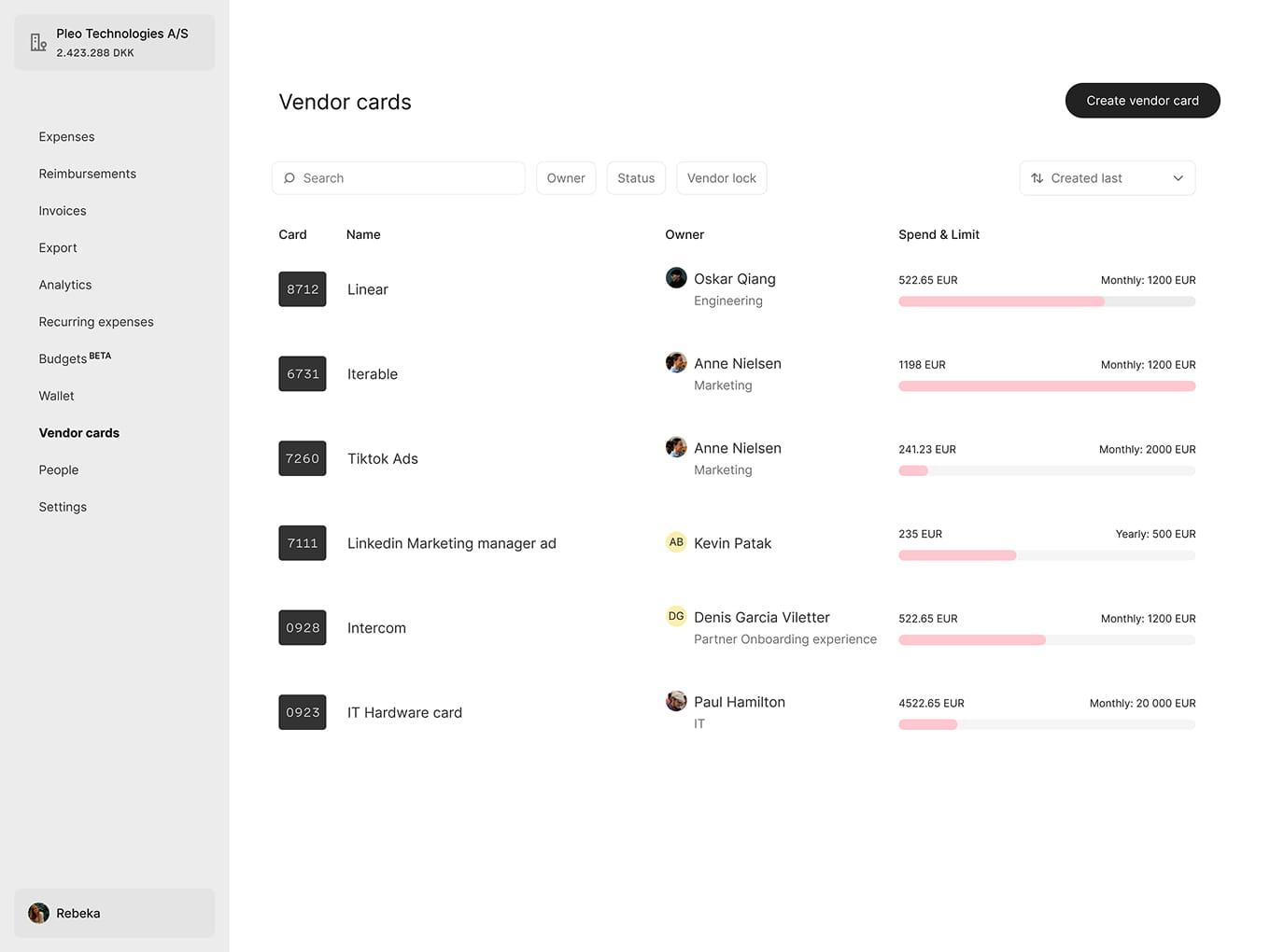
Before Vendor Cards, customers used company cards issued to individual employees to pay for subscriptions and large recurring expenses, such as advertising.
These payments required high spending limits, increasing the company's financial exposure if a card was lost or stolen. The payments were also tied to individual employees. When a cardholder left the company, those payments had to be moved to another card, creating manual work and a risk of disruption.
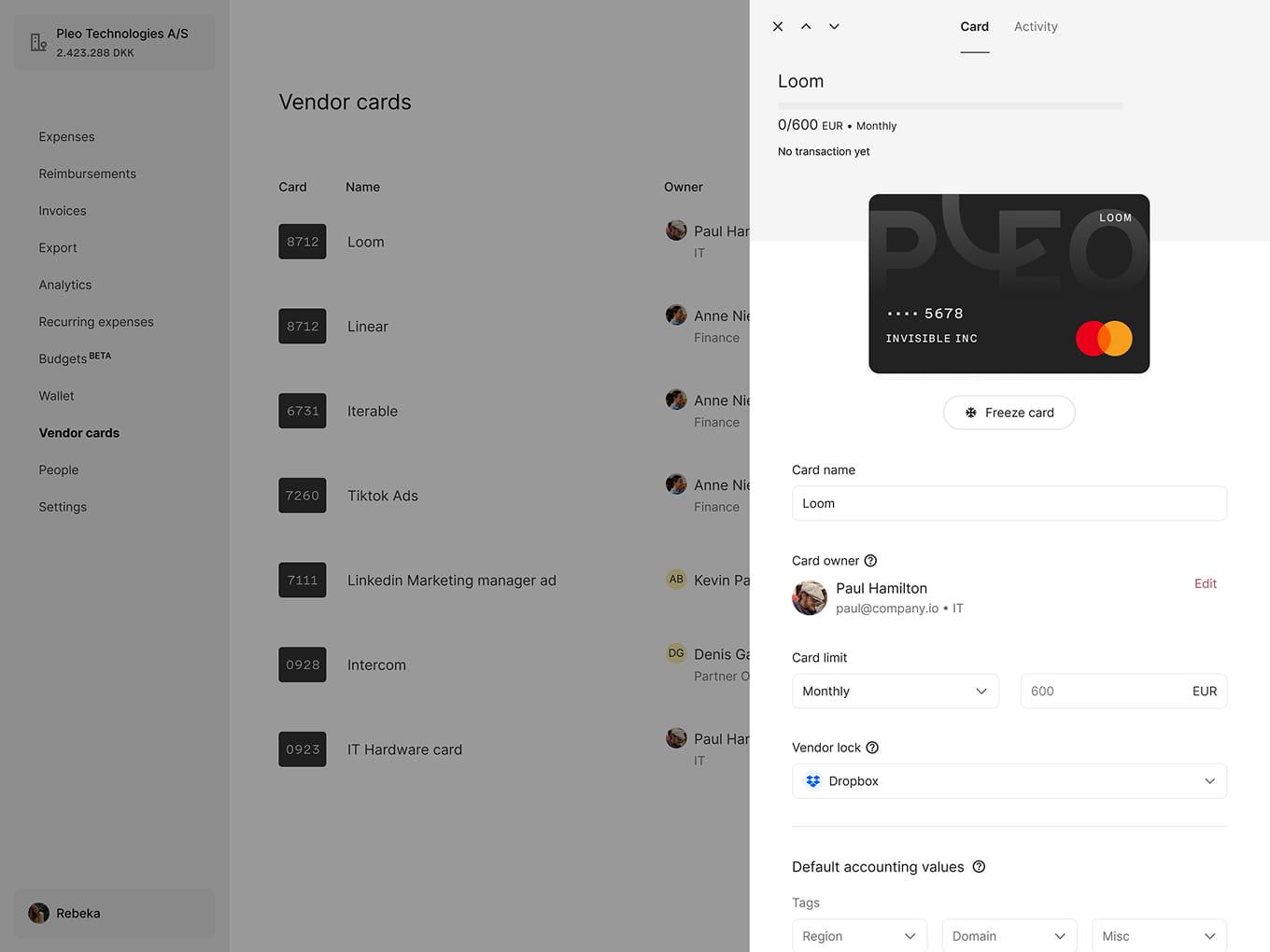
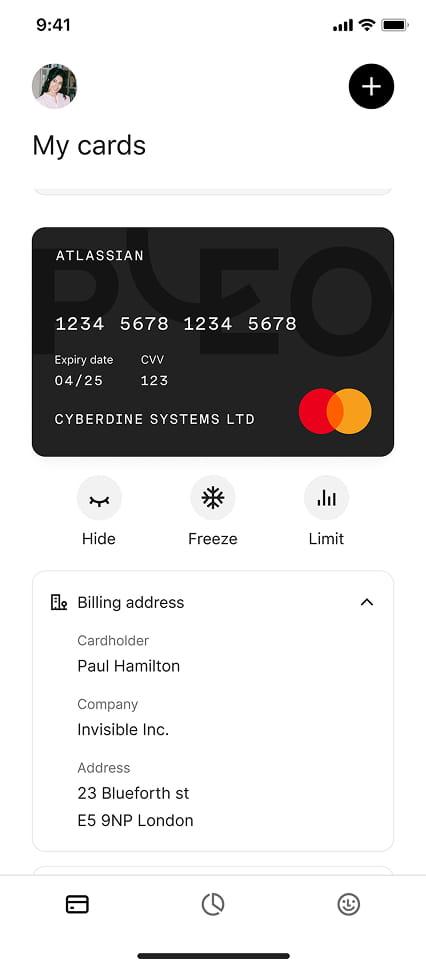
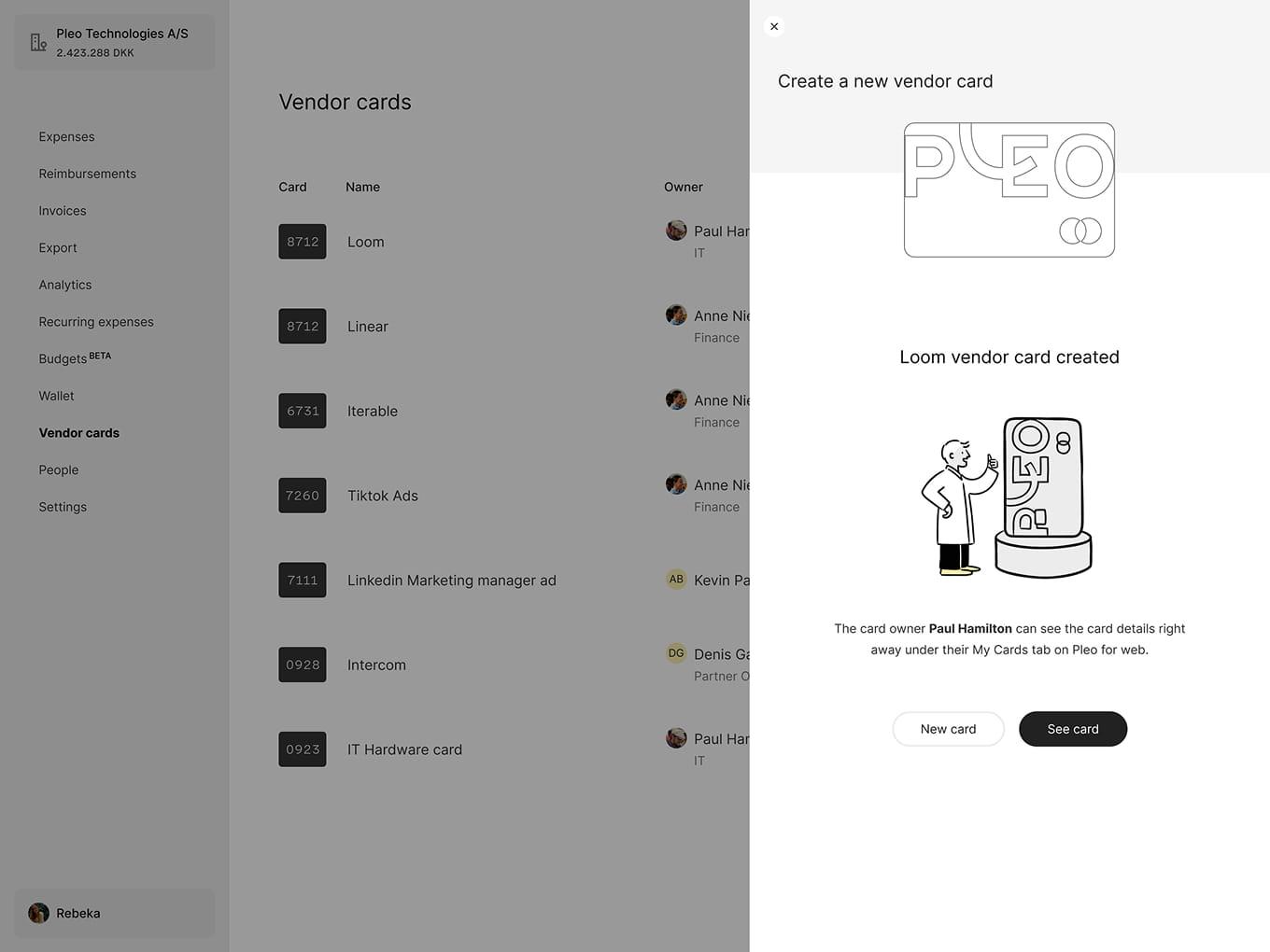
To address this, we built vendor cards: virtual cards designed specifically for recurring online payments and subscriptions. Admins could set spending limits independently of employees' individual cards and transfer ownership when an employee left, without having to move the payments to a new card.
Challenges
Although simple on the surface, vendor cards proved to be surprisingly complex.
- Cross-team dependencies: We had dependencies on multiple teams, the most notable being the payments infrastructure and card teams;
- Commercial alignment: Being a new feature, we had to align with the commercial teams and adapt the existing pricing plans;
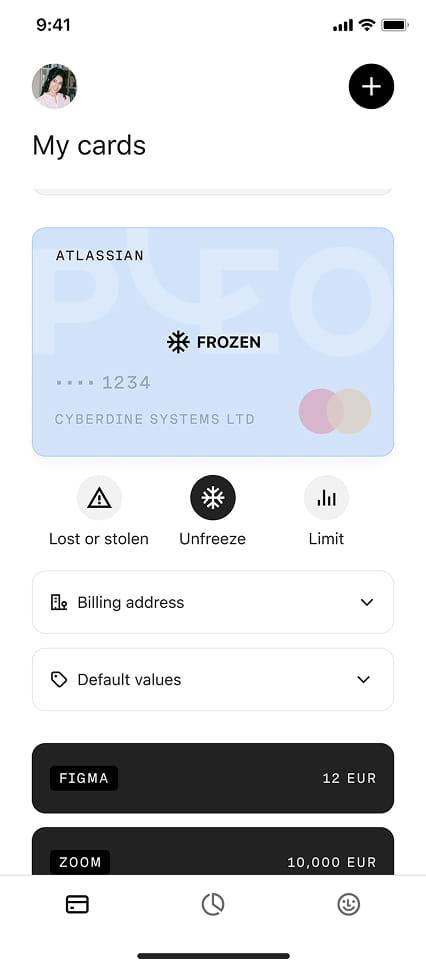
- Knowledge fragmentation: Most teams were new to the company, so we had to learn on our own – like discovering that a card can have 12 different states;
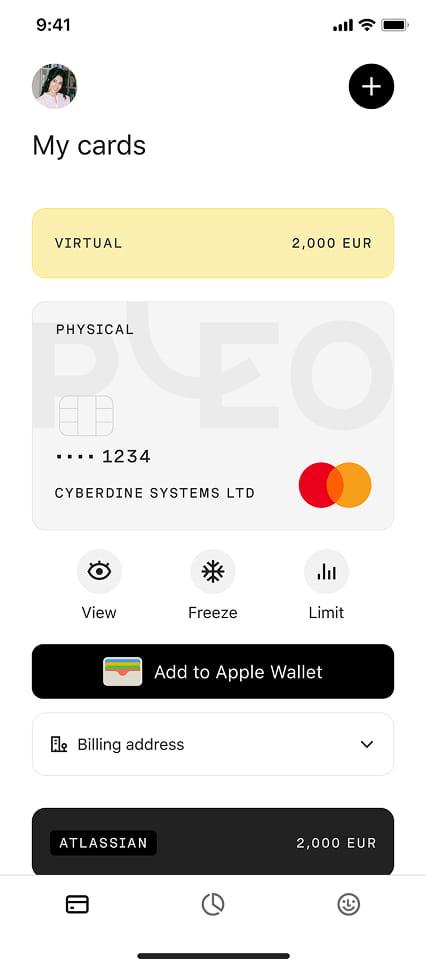
- Cross-platform delivery: We had to deliver the project on both web and mobile, focusing on different personas – admins in the web app and end users in the mobile app.
My role
As part of this project, I led the development of the web application, and I took full ownership of the mobile implementation. Beyond core development, my responsibilities also included:
- Writing design documents to reach consensus on technical decisions and streamline the cross-team dependencies;
- Collaborating with other teams to document our learnings and narrow the gap in knowledge fragmentation;
- Participating in customer calls and user interviews to better understand the user needs and their habits;
- Mentoring other team members via pair programming sessions, code reviews, and 1-on-1 meetings.
Key engineering decisions
Throughout the project, we made several engineering decisions that shaped vendor cards. Here are three I advocated for:
Adopting a new BFF architecture
Vendor cards depended on multiple backend services. With our existing API gateway setup, a failure in one service could affect unrelated parts of the feature.
To address this, I pushed for early adoption of the Backend for Frontend (BFF) architecture already being developed by the platform team. This helped us handle service failures independently, keep core functionality available, and avoid a future migration when BFF became the standard across Pleo.
Involving data analysts early
We typically involved data analysts once a feature was ready for testing, making tracking an afterthought. For vendor cards, I advocated for involving the data team before development began.
Together, we documented a tracking plan and had an Amplitude dashboard ready for the alpha release, allowing us to identify issues early and improve the experience before the wider rollout.
Reliability and observability by default
Pleo was looking to reduce incident response times. To support the initiative, alongside our Datadog and Sentry setup, I added Slack alerts to flag slow requests and unexpected errors.
The alerts were noisy at first, but after tweaking their thresholds, they started paying off. We spotted opportunities to improve performance by running requests in parallel and caught issues when other teams reused vendor cards functionality, sometimes before their features even launched.
Impact
While I love taking full ownership of what I build, this project was a true team effort. Together, our work led to:
- 8 figures in new spend generated through vendor cards;
- Better engineering practices, with early data tracking and proactive monitoring becoming the standard across our team's future projects;
- More room to innovate, as the project's success built trust with stakeholders and gave our team the freedom to explore new ideas like Recurring Vendors.
Learnings
Vendor cards was one of those projects where I really saw the value of contributing beyond writing code. By aligning on technical decisions through design docs, collaborating with other teams, and mentoring teammates, I could multiply my impact and help the whole team move forward.
It reinforced something that now shapes how I approach engineering: sometimes, the biggest contribution you can make is enabling others, not just doing more yourself.
Let's build something together
If you think I'm the right fit for your next project, let's talk. You can find me on LinkedIn or drop me an anytime.